
If you’re looking for a “set it and forget it” solution for choosing and managing your investments, target date retirement accounts are the closest you’ll get. But as with any investment, understand it before you buy it.
This post is adapted from a Plan Well, Retire Well blog post first written in 2013 for University of Illinois Extension. Used with permission
Target date retirement funds are the third tool that might help you get things done where investing is concerned. Like index mutual funds and automatic rebalancing that I wrote about previously, this is a tool that might simplify your investment decisions. If you’ve put off signing up for your employer retirement plan because you’re uncomfortable choosing the investments, read on! A target date retirement fund may be the solution.
These funds go by various names, including target date fund, retirement date fund, and lifecycle fund. Mutual fund companies may or may not use those terms in the name of the fund, but the tip-off is that there will be a series of funds, each with a year in their name such as Target 2030, Target 2035, Target 2040, etc. The year signifies that the asset allocation of the fund (how conservative or aggressive its investments are) is intended to be appropriate for someone retiring around that year. These funds are intended to provide one-stop shopping for investors.
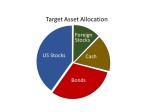
These mutual funds not only take care of rebalancing, they’ll even choose your target asset allocation for you and adjust it over time, to become more conservative as you age.
This type of mutual fund is offered by many different mutual fund companies. While they all follow the same general concept, there are significant differences. But you’ll probably only see the offerings from one mutual fund company in your 401(k) or 403(b) plan. Although I said this was going to help get you past your investment procrastination, you should do a little fact-finding before you leap.
Target date retirement funds are “funds of funds,” meaning that they invest in other mutual funds to achieve the desired asset allocation. The cost of owning the target date fund will be a little higher than the cost of the underlying mutual funds it uses, due to the added services. Those underlying funds could be index funds or actively managed ones. According to Vanguard.com (scroll down to the first footnote), target date funds based on index funds may have annual expense ratios of less than one tenth of 1%. That means it will cost you less than $1 each year for every $10,000 you have invested in the fund. The average expense ratio for target date funds in 2023 was 0.44%, or $44 per year for every $10,000 invested.
Take a look at the asset allocation for the fund closest to your anticipated retirement date. For example, if you plan to retire in 2033, you might look at the 2035 fund. Play with a couple of different asset allocation calculators to see what they suggest for your asset allocation. You can find these tools on the websites of many mutual funds, financial publishers, and employer websites. Compare your results to the asset allocation of the target date fund. If the target date fund is too aggressive for you, you could choose a fund aimed at people retiring at an earlier date, which would be more conservative.
The glide path of a target date fund is how the asset allocation changes as you approach and pass the target year. Some funds make no further adjustment after the retirement year; others continue to ratchet down the proportion invested in stocks. The US Securities and Exchange Commission (SEC) depicts two different glide paths in its Investor Alert. While that publication is old, the information is still accurate.
Target date retirement funds were designed to be a “one-stop shop” for investors. But if the ones you have access to aren’t appealing due to cost or other concerns (including confusion), you can always fall back on the procrastination-busting tools from my previous blog posts – index mutual funds and automatic rebalancing.





 Karen Chan Financial Education & Consulting, LLC
Leave a comment