
The value of most investments changes every day. Over time, they can get seriously out of whack compared to the allocation of stocks, bonds, and cash that you started with. If your account custodian offers automatic rebalancing, that can make it much easier to get things back to where they should be.
In a previous post, I promised to introduce you to three services or investment products that can help you get the job done and stop procrastinating when it comes to investing. Using index mutual funds as a way to simplify investment selection was the topic of the firsts post. Today, we look at automatic rebalancing, a tool that will help you manage those investments as time passes. Target date retirement funds will be the focus of the 3rd post in this Investing Made Simple series.
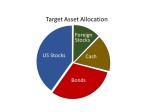
When you chose your investments, you had a specific asset allocation, meaning how your money was divided between stocks (including large US company stocks, small US company stocks, stocks of foreign companies), bonds, cash, and perhaps other asset classes. You might own individual stocks and bonds, but more likely you purchased mutual funds in each of those asset classes.
Let’s say you started with
- 35% US stocks
- 15% foreign stocks
- 30% bonds
- 20% cash
As time passes, what happens? The values of stocks and bonds change, and interest or dividends may be reinvested. The investments that had the greatest return become a larger portion of your portfolio. After a couple of years of good stock market returns, your portfolio might look like this:
- 42% US stocks
- 18% foreign stocks
- 25% bonds
- 15% cash
Most investment professionals use a technique called rebalancing to bring your investments back to your target asset allocation – in our example, the 35/15/30/20% split that we started with. You do this by selling some of the asset class that you now own too much of, and using that money to buy more of what is now too small a portion of your portfolio. Alternatively, you could redirect dividends, interest, or new deposits to the asset classes you need to build up. For a retiree who is taking required distributions from retirement plans or generally spending down assets, you can take your withdrawals from the asset class that has grown larger than your target allocation.
Doesn’t that sound like fun? Not to me. In theory, it’s not bad. But in reality, it can be tedious and time consuming, especially if your investments are spread across several accounts. For example, a married couple might have “his and her” employer plans as well as “his and her” IRAs, maybe even Roth IRAs, too, and even a non-retirement investment account where selling assets with a gain will have income tax consequences. But I do think rebalancing is important. It may improve investment returns, but more importantly it keeps the amount of risk in my portfolio where I expect it to be.
Some mutual fund companies and brokerages offer automatic rebalancing as a service. You tell them what you target asset allocation is, and they will either automatically rejigger your account when needed or ask for your OK to make the trades needed to rebalance. It’s quick and easy. However, there are shortcomings. Automatic rebalancing may not be offered in non-retirement accounts; capital gains and losses makes rebalancing in those accounts much more complex. For employer retirement plans, you may be required to allocate new contributions to asset classes in the same proportions as your target asset allocation – which makes sense, but might for some reason not be you preference. And an even bigger issue for those with multiple accounts is, these tools will only rebalance the funds in that particular account. You’ll have to set up auto-rebalancing in each of your accounts, or do it manually. And you’ll have to decide whether all your accounts will have the same asset allocation or different ones that, together, achieve the overall allocation you want.
Automatic rebalancing isn’t a perfect solution, but once set up, it offers a way to keep your investments on track with little effort. Procrastination can’t happen!
The next post in this Investing Made Simple series will look at target date retirement funds.





 Karen Chan Financial Education & Consulting, LLC
[…] tool that might help you get things done where investing is concerned. Like index mutual funds and automatic rebalancing that I wrote about previously, this is a tool that might simplify your investment decisions. If […]